The following is an edited version of an original article (How Spleen Australia Began: The Early Years, 2003–2006) by Professor Denis Spelman, Infectious Diseases Physician and co-founder
This is a history of the very early days of Spleen Australia, initially called the Victorian Spleen Registry.
A young woman came to the Alfred Hospital and died of overwhelming infection, the kind that can strike people who no longer have a working spleen. She'd had her spleen removed thirteen years earlier, as part of treatment for lymphoma. Her death was preventable. We knew the interventions that could have saved her. What we didn't have was a system to make sure those interventions actually happened.
That's how the idea for a Spleen Registry was born.
Getting started
Finding money to get this off the ground was the first real battle. Our early funding applications went nowhere. Then, in early 2003, we finally secured Public Health Project funding from the Victorian Department of Human Services thanks to a joint proposal from physicians at Alfred Hospital and Monash Medical Centre.
Things moved quickly after that. We got ethics approval in March 2003, and by September the Spleen Registry had a home at the Alfred Hospital.
Things moved quickly after that. We got ethics approval in March 2003, and by September the Spleen Registry had a home at the Alfred Hospital.
We hired Penelope Jones as our Registry Coordinator; she started on 15 September 2003 and by December we were enrolling our first patients.
We pulled together an advisory group to guide the work: infectious diseases physicians, clinical haematologists, an immunologist, plus input from surgeons, vaccine specialists, pharmacists, GPs and pathologists. At the time, nowhere in the world had anything like this running. We were building it from scratch.
The initial funding was a one-off, not ongoing, so we spent much of these early years chasing the next source of money too. That included a fundraising concert in March 2005, held behind the Alfred, featuring a well-known comedian, with money coming in from ticket sales, raffles and donations.
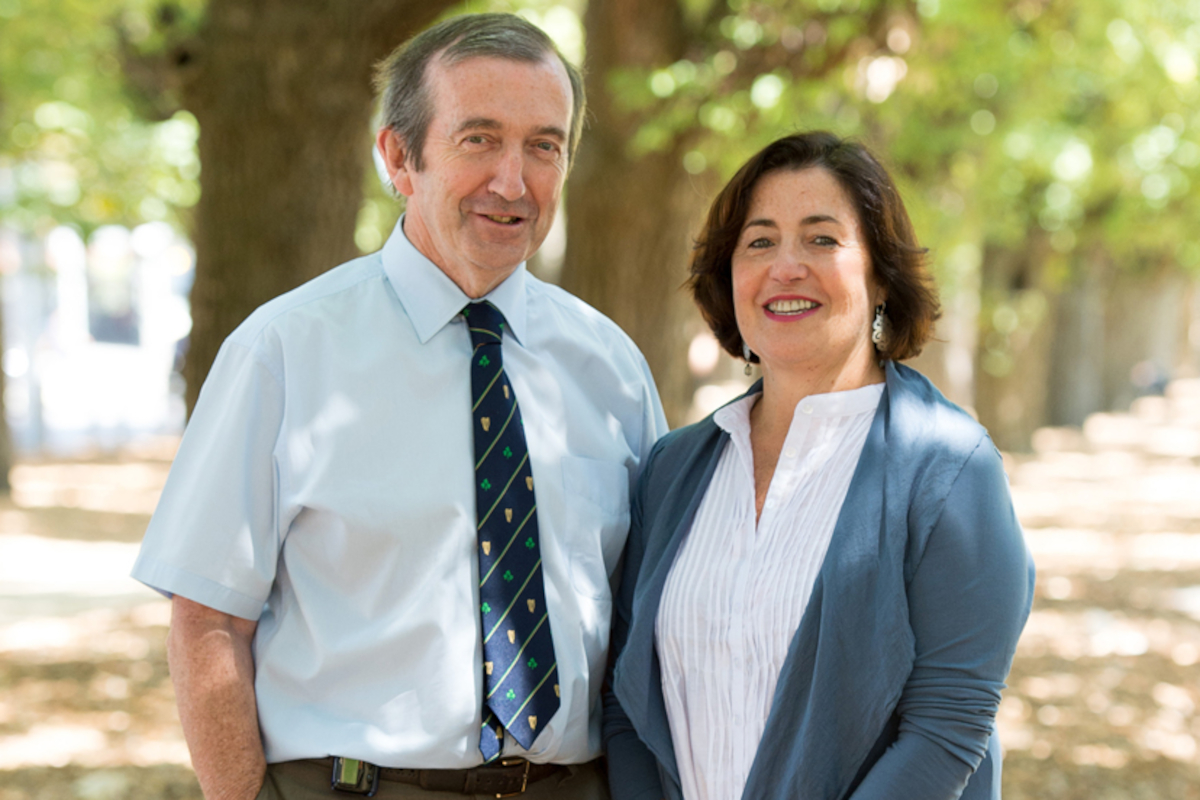
Denis Spelman and Penny Jones
What we built
The advisory group did a huge amount of work in a short time. We reviewed the medical literature and pulled together, alongside the Australian Immunisation Handbook, a set of best-practice guidelines on antibiotics and vaccination for people without a working spleen — whether they'd lost it entirely (asplenia) or just had reduced function (hyposplenia). We also wrote specific guidance for trickier cases, like splenic embolisation after trauma, and splenectomy during pregnancy.
Before we registered a single patient, we locked down our approach to data: strict rules on collection, storage and security, informed consent, and the ability for anyone to opt out at any time. Records were password protected, filing cabinets were locked, and identifiable data never left the building; only de-identified data went into reports, publications or audits.
We also built tools to help patients understand their risk: an education kit with our recommendations, an information sheet, a fridge magnet, details on medical alert medallions, and a wallet-sized spleen card. We sent an annual newsletter to patients and their doctors and put our recommendations and registration forms online through the Alfred's Infectious Diseases website page.
For each patient, we recorded the basics:
- Demographics
- Why and when they'd had a splenectomy
- The underlying condition, allergies, vaccination history
- Past infections or blood clots.
We noted their GP's details, and at the Alfred, we flagged their file with a medical alert sticker so it wouldn't be missed.
Finding our community
We started close to home, recruiting through Alfred Hospital and Southern Health, which covered Monash Medical Centre and Dandenong Hospital. Trauma coordinators and pathology referred recent splenectomy patients at the Alfred; at Monash, referrals mostly came through infectious diseases physicians. We always checked with the treating team before approaching a patient.
The March 2005 fundraiser also brought us unexpected reach, a media release about the Registry led to 150 phone calls from people across Australia, many of whom had no idea their missing or underperforming spleen put them at risk at all.
One thing became clear early on: patients who'd just had their spleen removed were easy to find and register.
People who'd had it done years, even decades, earlier were a different story, they were much harder to track down.
By December 2005, two years in, we'd registered 330 patients, with numbers climbing steadily and jumping sharply after the media coverage.
- Trauma accounted for 47% of splenectomies
- Blood disorders 28%
- Incidental removal during other surgery 8%
- Cancer 8%
- Pancreatic disease 4%
- Spontaneous rupture 3%
- and the rest were miscellaneous.
Twenty-two patients hadn't had their spleen removed at all but had hyposplenia from an underlying condition or prior treatment. Two women in this group had splenectomies during pregnancy giving us a reminder of how important it was to work closely with specialists in other fields.
Uptake wasn't perfect. Cost of vaccines and antibiotics, travel, and time off work kept some patients from fully following our recommendations, though this only affected a minority. We also worked with interpreters for our non-English-speaking patients, and our education kit was translated into Italian during this period.
Where we hoped it would go
By 2006 we'd published a cost-effectiveness study in the Australian and New Zealand Journal of Public Health and had studies underway looking at how well patients stuck with their medications and retained what we'd taught them.
Even in these early days, we could see the bigger picture: a statewide, and eventually national, service; better and cheaper access to vaccines; a role in managing other conditions linked to spleen problems; and a future where research would sharpen our diagnostic tools and prevention methods even further.
What started as a response to one preventable death was becoming something much bigger.
Spleen Australia has grown into something much more than Professor Denis Spelman imagined it would. Everything that is available to patients today would have not been possible without the dedication of Prof. Spelman and dozens of other committed healthcare professionals.