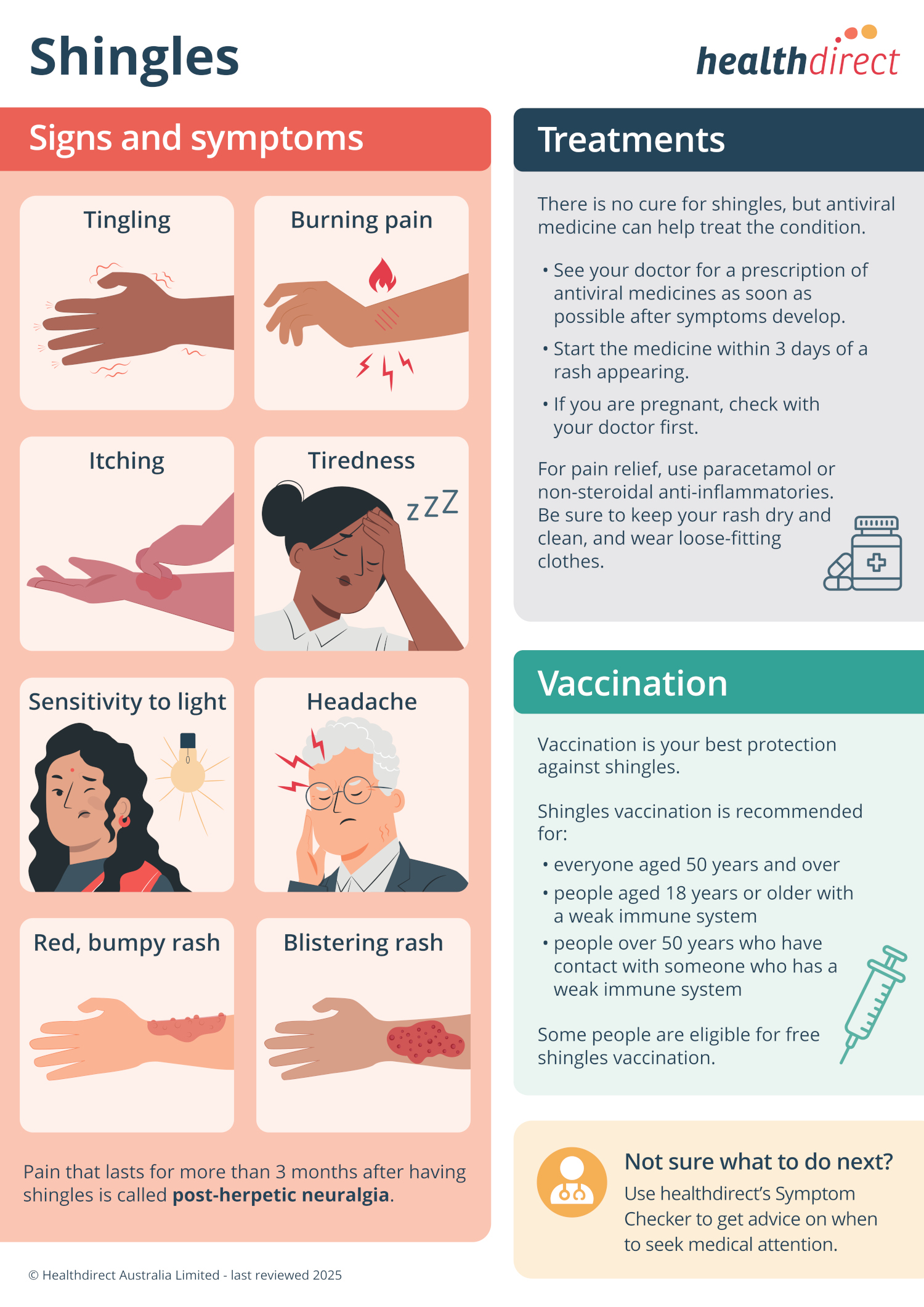
If you had chickenpox as a kid, you're at risk of shingles as an adult. That's because the virus that causes chickenpox, Varicella Zoster Virus (VZV), doesn't fully leave your body - it lies dormant in your nerves.
Later in life it can reactivate as shingles, which is a painful, blistering rash that can appear on the face and other parts of the body.
In some cases, the pain persists long after the rash clears, a complication called post-herpetic neuralgia.
Staying safe is sound
The good news is that a vaccine is now available.
Shingrix (the recombinant zoster vaccine, or RZV) is free under the National Immunisation Program for people at higher risk of severe shingles:
- Aboriginal and Torres Strait Islander peoples aged 50+
- Everyone else aged 65+
- Immunocompromised people aged 18+
It's not yet known whether having no functioning spleen raises shingles risk on its own, so for now, registrants can only access the free vaccine if they fall into one of the groups above.
What we did
In 2023, we surveyed Spleen Australia registrants to find out how many had experienced shingles and how many had been vaccinated against it.
What we found:
- 2,657 registrants completed the survey
- 75% had had chickenpox in the past
- 1 in 5 had experienced shingles
- 4% had had it more than once
- Only 1 in 4 had been vaccinated against shingles
Two groups stood out as having a higher shingles risk, people over 61, and people who'd had a splenectomy for blood cancer.
People with an autoimmune disease were also more likely to have had shingles - likely linked to the medications used to manage those conditions.
The bottom line
Shingles risk climbs with age, but vaccination rates haven't kept pace. Most people in the 61–70 and 71–80 age brackets hadn't been vaccinated.
If you're over 64, this is your reminder - talk to your doctor about getting the shingles vaccine.
Thank you for participating!
Spleen Australia study on shingles is published in the academic journal Vaccine
Published by Dr Gabriela Khoury and Prof Ian Woolley